
Blood Strike: 2.5 Anniversary
NetEase GamesAction
4.318.90K Reviews
- Version
- Varies With Device
- Installs
- 100.00M
- Age Rating
- Teen
Screenshots

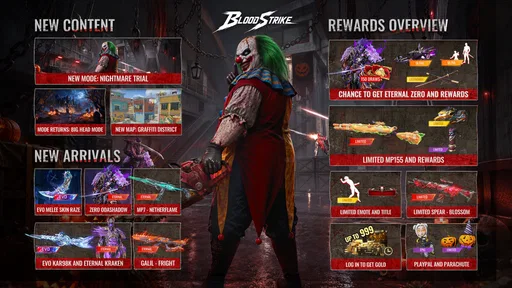


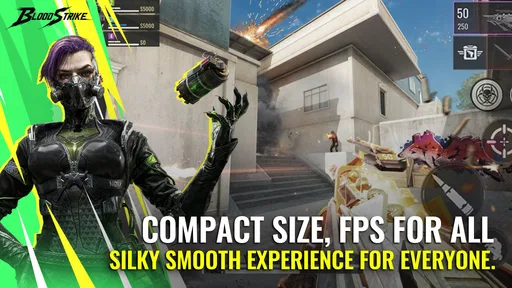
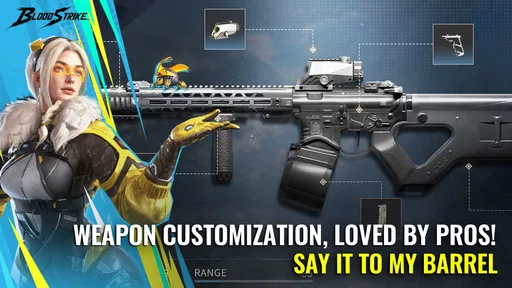
Our Review of Blood Strike: 2.5 Anniversary
 Analysis by Appyee
I tend to judge a mobile shooter by how quickly I can understand what is happening without having to fight the interface at the same time. Blood Strike - FPS for all makes a brisk first impression: movement, aiming and shooting are presented as the core of the experience, and the action does not ask me to settle in for a long tutorial before I can get involved. That directness suits quick play, though the pace also means new players may need a few matches to get comfortable with the visual activity and decisions happening at once.
Gameplay Experience
I find the most useful way to approach a new match is to choose one thing to focus on—movement, aiming, or reading the situation—rather than trying to improve everything at once. That makes the early experience feel less overwhelming and gives me a clearer sense of what is comfortable on my device. Next, I’d look at how the pace and sensory demands fit the places and times I actually play.
Readability and navigation in the middle of a match
Right off the bat, Blood Strike - FPS for all hits you with its fast-paced action. The controls are smooth and intuitive, which is a huge plus. I mean, who wants to fumble with clunky controls when you're in the heat of battle, right? The game offers an array of weapons that you can customize to your heart's desire. Whether you’re a sniper in the shadows or a shotgun-wielding warrior, there's something for everyone.
That first impression is useful, but there is a difference between controls that feel approachable and a shooter that is instantly easy to read. In a firefight, I have to divide attention between aiming, movement, the environment and the team situation. My practical advice is to give yourself a low-pressure first session: learn how the on-screen controls respond before trying to play aggressively, and avoid changing several control habits at once. A small, deliberate adjustment is easier to judge than rebuilding your setup after every match.
Weapon customization adds another layer to that learning process. Rather than treating every option as an automatic upgrade, I would make one change at a time and pay attention to whether it helps with the way I actually play. If I prefer close encounters, a setup that feels comfortable at short range matters more than copying a choice that suits a distant, patient style. This is a useful habit in any competitive shooter, but especially here, where quick decisions can make a familiar weapon feel very different from one encounter to the next.
What I really appreciate is the variety of game modes. From classic team deathmatches to intense battle royales, there’s always something to keep you on your toes. And let's be honest, nothing beats the rush of outsmarting your opponent in a high-stakes duel.
The choice of mode also changes what a good session looks like. A team deathmatch is a natural option when I want repeated, direct encounters, while a battle royale asks for more patience and attention to the larger match. If I only have a short break, I would lean toward the mode that lets me get into the action without making the whole session feel like a commitment. If I have more time and want to think about positioning and survival, the battle royale format is a better fit. That flexibility is one of the game's most practical strengths.
Motor and sensory considerations
Fast first-person action can be demanding even when the controls feel responsive. Players who are still learning touchscreen aiming, or who find repeated, precise movements tiring, may need time to settle into a comfortable rhythm. I would start by focusing on movement and basic aiming rather than trying to make every encounter a perfect shot. It is also sensible to pause between matches if the rapid camera movement or constant combat becomes uncomfortable; there is little benefit in pushing through a session that stops being enjoyable.
The original appeal of the sound design is clear: gunfire and environmental audio help make encounters feel immediate. Headphones can make those cues easier to notice, but they also make the sensory experience more intense. I would use them when I can listen comfortably and keep the volume at a level that feels safe. When sound is not practical, I would pay closer attention to what the screen is communicating and avoid assuming that audio alone will tell me where danger is. This is a shooter where visual focus remains important, particularly when several things are happening at once.
That balance matters for different players and settings. Someone playing in a quiet room with headphones may pick up a different atmosphere from someone playing on a commute with the sound low. Neither situation is automatically wrong, but the latter can make it harder to follow audio cues and team communication. If I am distracted or cannot comfortably see the screen, I would choose a calmer time to play rather than expect a fast match to work well in every environment.
Situational access: where the game fits
A realistic use case is a short evening break after other tasks are finished. I can choose a mode that suits the time I have, play a match or two, and stop without needing to turn the game into a long planned session. On another day, I might have more time to explore weapon choices and play with a team. The important point is that the game can serve both moods, but the battle royale option is less suited to a moment when I may need to leave unexpectedly.
For a newcomer, I would treat early matches as practice rather than a test of skill. Pay attention to which situations feel manageable: close-range encounters, holding back and watching the map, or coordinating with teammates. Then choose weapons and modes that let you build confidence in that area. This is more useful than trying to master everything at once, and it gives customization a purpose beyond collecting options.
As an action game from NetEase Games, Blood Strike sits in a familiar mobile FPS space, but its combination of team-based matches and battle royale play gives it more than one pace. Compared with a shooter built mainly around short arena rounds, it can offer a more expansive survival match; compared with a game centered on long, deliberate sessions, its quick action may be easier to fit into spare time. The trade-off is that players seeking a slow, tactical experience may find its intensity less appealing, while players who dislike competitive multiplayer may simply prefer a single-player action game.
It is also worth thinking about the setting before opening a match. A noisy commute, a dim room or a small screen viewed at an awkward angle can make a fast shooter harder to follow. I would save it for a moment when I can hold the device comfortably and give the action my attention. That is not a special requirement unique to one player; it is a practical way to make the game more readable and less tiring.
Graphics and Sound Design
Visually, the game is a treat. The graphics are crisp and detailed, which really brings the maps to life. You can tell the developers put a lot of effort into creating immersive environments. Whether you're battling in a desert wasteland or navigating a dense urban jungle, the attention to detail is impressive.
Visual detail can make a map feel engaging, but it also means there is plenty to take in while moving and aiming. I find it helpful to keep my attention on the immediate route and threat rather than trying to inspect every corner during a firefight. Between encounters, taking a moment to notice the layout can make later movement feel less reactive. In other words, the environments are most useful when I learn them gradually, not when I expect to absorb everything in the middle of a hectic exchange.
The sound design complements the visuals perfectly. The gunfire sounds realistic, and the ambient noises add to the tension of each match. Pop in your headphones, and you’ll feel like you’re right in the middle of the action. It's these little touches that elevate the overall experience.
There is a clear trade-off here: immersion can help me feel present in a match, but it can also make a long session more intense. If I notice that the sound and visual pace are wearing me down, taking a break is a better choice than turning every match into a test of endurance. Players who prefer a quieter experience may enjoy the visuals while keeping audio less prominent, with the understanding that they may not experience the same level of sound-led atmosphere.
Community and Multiplayer
One thing that can make or break a multiplayer game is its community. Thankfully, Blood Strike - FPS for all has a solid player base. The matchmaking is quick, and there’s always a healthy mix of players online. Plus, the in-game chat feature makes it easy to strategize with your teammates or, you know, engage in some friendly banter with your opponents.
For players who do not want to talk during every match, multiplayer does not have to mean constant conversation. I would use chat when I have something useful to communicate and keep my attention on the match when I do not. A player who enjoys coordinating with others may get more out of the social side, while someone who prefers quiet play can still focus on their own decisions. The balance depends on the moment, and it is fine to treat communication as a tool rather than a performance.
Another cool feature is the clan system. Joining a clan not only enhances the social aspect but also unlocks special rewards and challenges. It's a great way to connect with other players who share your passion for the game.
The clan option is most appealing if I expect to return regularly and want a familiar group around the game. If I am only testing the shooter or play sporadically, I would first decide whether the social commitment sounds enjoyable instead of joining simply because the feature exists. A group can make coordinated play feel more welcoming, but players who want a fully solitary experience may be happier with a single-player title than with any multiplayer shooter.
Remaining barriers, updates and support
Even a smooth control scheme cannot remove every barrier. Competitive matches reward quick reactions and sustained attention, so players who need a slower pace may not find the core loop comfortable. The same goes for anyone who has difficulty with rapid aiming or visually busy scenes: the game may take patience to learn, and there may be sessions when it is simply not the right fit. I would not mistake the approachable controls for a promise that every match will feel easy.
In the ever-evolving world of gaming, updates are crucial, and this game doesn't disappoint. The developers are proactive in rolling out updates that include new content, bug fixes, and performance improvements. It's clear they’re committed to keeping the game fresh and engaging.
The version available now is 1.003.650013, and I would keep the game current when possible so I can use the release intended for play rather than an older build. Blood Strike is free to start, with optional in-app purchases ranging from $0.29 to $99.99 per item. That range makes it worth setting a personal spending limit before browsing purchases. I would first decide whether I enjoy the actual matches; spending is not a substitute for learning the controls or finding a mode I like.
Customer support also deserves a shoutout. Any issues are addressed promptly, and the support team is responsive and helpful. It’s reassuring to know that the developers are listening to the community and making improvements based on feedback.
For the basic device question, the game supports Android 5.0 and later, which gives many Android users a straightforward starting point for checking compatibility. It is rated Teen, so parents should consider whether its action and multiplayer setting suit the young person using the device. The game was released on December 12, 2023, and has reached over 50 million installs. Its 4.3 average comes from around 978,000 ratings, alongside roughly 17,000 written reviews; that level of attention suggests many people have tried it, but it cannot tell me whether its fast pace will suit a particular player.
In practical terms, I would recommend it to someone who wants an active mobile FPS, likes switching between team fights and battle royale matches, and is willing to practise. I would suggest skipping it if you want a calm game, dislike competing against other players, or need a shooter that asks for very little visual or motor effort. For those players, a slower action game or a single-player alternative is likely to be a more comfortable choice.
An inclusive verdict for the right kind of player
Blood Strike - FPS for all is more than just another shooter; it's a thrilling experience that keeps you coming back for more. Whether you're a casual player or a hardcore FPS fan, there's something here for everyone. So, gear up, dive in, and see if you have what it takes to emerge victorious. Trust me, you won't be disappointed.
I would soften that enthusiasm for anyone whose comfort depends on slower movement, reduced sensory intensity or predictable pauses. The game’s range of modes and its approachable start give different players ways to find a preferred rhythm, but its defining appeal is still fast competitive action. My recommendation is to try a short session, pay attention to how the controls and pace feel in your hands, and decide from that experience rather than from the broad promise of an FPS made for everyone.
For me, its strongest inclusive quality is that it offers choices about how to spend a session: focused team encounters, a more drawn-out battle royale, solo practice in one’s own style, or social play through a clan. Those choices do not erase the barriers of speed, screen demands and competitive pressure, but they make it easier to find a workable entry point. If that entry point feels fun rather than tiring, this is a free action game worth exploring; if it does not, choosing a slower alternative is a perfectly sensible call.
Privacy and Permissions
See what permissions an app requests and how it handles your data.
- Calendar
- read calendar events plus confidential information, add or modify calendar events and send email to guests without owners' knowledge
- Photos/Media/Files
- read the contents of your USB storage, modify or delete the contents of your USB storage
- Storage
- read the contents of your USB storage, modify or delete the contents of your USB storage
- Camera
- take pictures and videos
- Microphone
- record audio
- Wi-Fi connection information
- view Wi-Fi connections
- Other
- view network connections, pair with Bluetooth devices, access Bluetooth settings, change network connectivity, connect and disconnect from Wi-Fi, control flashlight, full network access, change your audio settings, run at startup, control vibration, prevent device from sleeping, read Google service configuration
Verdict
Strengths of Blood Strike: 2.5 Anniversary
- Smooth gameplay with responsive controls.
- Diverse weapon customization options.
- Engaging multiplayer modes available.
- Regular updates with new features.
- Impressive graphics and sound effects.
Limitations of Blood Strike: 2.5 Anniversary
- Occasional in-game lag during peak times.
- In-app purchases can be quite costly.
- Limited offline gameplay features.
- Some maps feel repetitive over time.
- Requires high-performance devices.
Other Releases by NetEase Games
View All


Similar Picks in This Category
View All
Temple Run 2: Endless Escape
Imangi Studios4.1

PUBG MOBILE
Level Infinite4.3

Free Fire: 9th Anniversary
GARENA INTERNATIONAL I4.4

Talking Tom: Hero Dash Run
Outfit7 Limited4.3

slither.io
Lowtech Studios3.9

Sniper 3D:Gun Shooting Games
Wildlife Studios4.6
Frequently Asked Questions
What is Blood Strike - FPS for all about?
Blood Strike - FPS for all is a fast-paced first-person shooter game designed for mobile devices. Players engage in intense battles using a variety of weapons and strategies. The game offers multiple modes, including team deathmatch and solo missions, catering to both casual gamers and FPS enthusiasts seeking competitive play.
Is Blood Strike - FPS for all free to play?
Yes, Blood Strike - FPS for all is free to download and play. However, it includes in-app purchases that allow players to buy cosmetic items, weapon upgrades, and other enhancements. These purchases can enhance gameplay but are not necessary to enjoy the core experience.
What are the minimum device requirements for Blood Strike - FPS for all?
To run Blood Strike - FPS for all smoothly, Android devices should have at least 2GB of RAM and be running Android 5.0 or higher. For iOS, the game requires iOS 10.0 or later. Ensuring your device meets these specifications will help maintain optimal performance and graphics quality.
Does Blood Strike - FPS for all support multiplayer mode?
Yes, Blood Strike - FPS for all supports multiplayer mode, allowing players to engage in real-time battles against others worldwide. The game includes various multiplayer options such as team deathmatch and capture the flag, promoting a competitive environment and encouraging teamwork.
Are there any parental controls in Blood Strike - FPS for all?
Blood Strike - FPS for all includes some parental control features to manage in-app purchases and screen time. Parents can set restrictions via device settings to prevent unauthorized purchases and limit gameplay duration, ensuring a balanced gaming experience for younger players.
Play our best games!


